How to Read a Recipe
Learn to see a recipe as a plan—ingredients, preparation, timing, and decisions—not a list of commands.
- Recipe planning
- Ingredient language
- Sequencing
- Timing
Learn It
Read the full recipe before you turn on anything.
Prep time is the active work before cooking; cook time begins when heat does the work. Ingredients are often listed in the order they appear, and words after a comma tell you what must happen before that ingredient enters the pan.
“Divided” means one measured ingredient is used in more than one place. “To taste” means start with less, taste, then decide. “Bring to a boil, reduce to a simmer” means use stronger heat to get there and gentler heat to stay there.
See It: Recipe Map
Use this simple tomato toast recipe to find the plan inside the words.
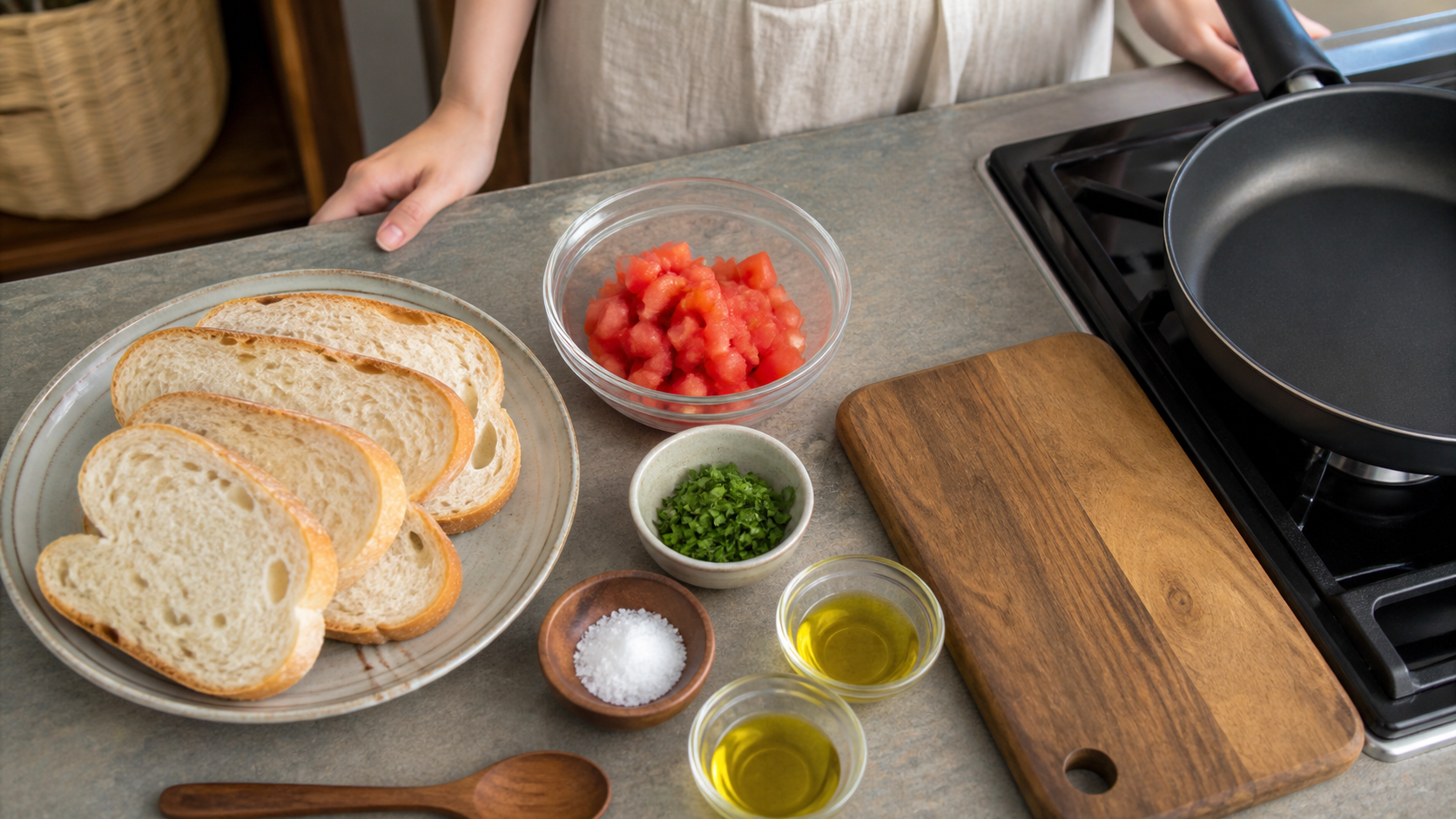
Ingredients
2 slices bread; 1 tomato, diced; 1 tablespoon olive oil, divided; pinch of salt; optional basil.
Prepare first
Dice the tomato. Mix it with half the oil and a pinch of salt. Put the skillet and spatula near the stove.
Sequence
Heat the pan → toast bread with remaining oil → top with tomato → taste and adjust.
Cook It: Tomato Toast
- Read every step and find the word “divided.”
- Gather and prepare all ingredients before heating the pan.
- Warm half the oil over medium heat. Toast the bread until golden, 2–3 minutes per side.
- Top with the tomato mixture. Taste. Add salt only if it needs it.
Why It Works
Your working memory is limited. Reading first lets you spot a preheated oven, a marinating step, two tasks that overlap, or an ingredient used twice before any of those details can surprise you.
Common Mistakes
- Reading only one step ahead.
- Missing preparation words such as diced, softened, or drained.
- Treating every listed time as exact.
- Preparing an ingredient only after the pan is already hot.
- Adding all of a “divided” ingredient at once.
Fix It
- If the pan is waiting on you, lower the heat or move it off the burner.
- If an ingredient went in too early, decide whether it can safely stay or should be removed temporarily.
- If timing slips, protect the part most likely to burn first.
Try Again
Choose any short recipe. Circle preparation words, underline heat changes, and number any tasks that can happen at the same time.
Level Up
Now that you can read the plan, learn how to read the pan. Heat settings are only the beginning of that conversation.